News Detail
Why Is Borosilicate Glass Better Suited for Industrial Equipment?
Borosilicate glass has become one of the most widely used materials in industrial equipment, and for good reason. Compared with ordinary soda-lime glass, borosilicate glass offers a unique combination of thermal, chemical, and mechanical properties that make it especially suitable for demanding industrial environments.
One of the most important advantages of borosilicate glass is its low thermal expansion coefficient. This allows the material to withstand rapid temperature changes without cracking. In industrial processes involving high temperatures, sudden heating, or frequent thermal cycling—such as chemical reactors, sight glasses, and laboratory apparatus—thermal shock resistance is critical. Borosilicate glass can safely handle these conditions, reducing the risk of unexpected failure.
Chemical resistance is another key factor. Borosilicate glass shows excellent stability against acids, alkalis, solvents, and corrosive gases. This makes it ideal for chemical processing equipment, pharmaceutical systems, and analytical instruments where material purity and long-term resistance to corrosion are essential. Unlike some metals or plastics, borosilicate glass does not react with most chemicals, ensuring process safety and product integrity.
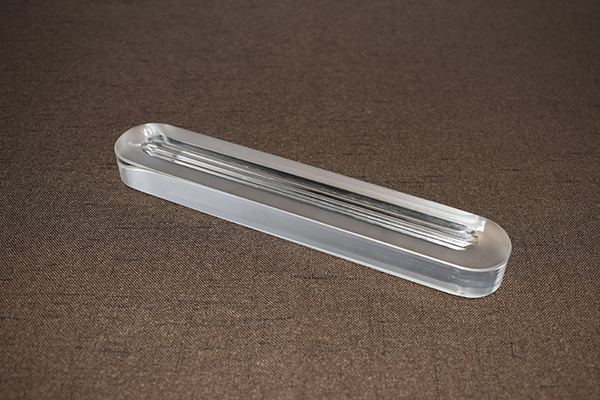
From a mechanical perspective, borosilicate glass offers good strength and durability while maintaining transparency. This combination is particularly valuable in industrial sight glasses and viewing windows, where operators need to visually monitor flow, pressure, or reactions in real time without compromising safety.
In addition, borosilicate glass maintains stable optical properties even under harsh conditions. High clarity, low distortion, and resistance to discoloration ensure reliable visual inspection over long service periods.
Finally, borosilicate glass is well suited for precision processing. It can be cut, drilled, polished, and sealed with high accuracy, allowing manufacturers to produce custom components for specialized industrial equipment.
In summary, borosilicate glass is better suited for industrial equipment because of its outstanding thermal shock resistance, chemical durability, mechanical reliability, and optical stability. These advantages translate into longer service life, improved safety, and lower maintenance costs in industrial applications.