News Detail
Why Does Sight Glass Require Strict Dimensional Tolerances?
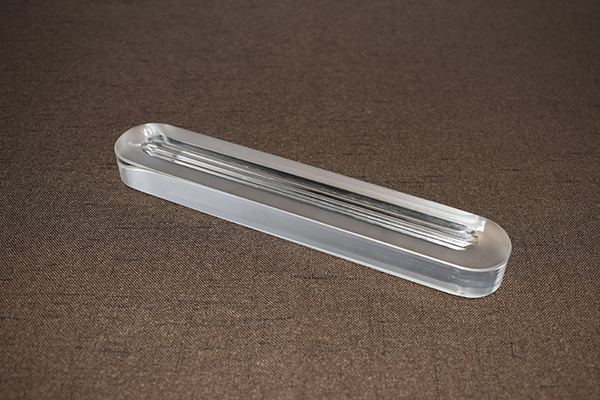
In industrial equipment, sight glass is not just a transparent component—it is a pressure-bearing and sealing element. Its performance depends heavily on how precisely it fits within the installation structure. Strict dimensional tolerances are therefore essential to ensure safety, reliability, and long-term operation.
The first reason is uniform stress distribution. Sight glass is typically clamped within a metal frame or flange. If the dimensions deviate from specification, the contact between the glass and the mounting surface becomes uneven. This can create localized stress concentrations, which significantly increase the risk of cracking or sudden failure under pressure.
Sealing performance is another critical factor. Gaskets rely on consistent compression between the glass and the metal structure to maintain a leak-tight seal. If the glass is too large, it may be over-compressed, introducing excessive stress. If it is too small, insufficient compression can lead to leakage. Tight dimensional control ensures proper sealing without compromising structural integrity.
Precise tolerances also ensure assembly compatibility. Industrial equipment often requires standardized flange sizes and interchangeable components. Sight glass must match these specifications exactly to allow smooth installation, replacement, and maintenance. Poor dimensional accuracy can lead to misalignment, installation difficulty, or even damage during assembly.
Another important aspect is thermal stress management. Glass and metal expand at different rates under temperature changes. Accurate dimensions help maintain the correct clearance and gasket compression, allowing the structure to accommodate thermal expansion without introducing additional stress.
Edge alignment and surface contact quality also depend on dimensional precision. Properly sized glass ensures full and even contact with sealing surfaces, improving both mechanical stability and durability over time.
In high-pressure or safety-critical applications, strict tolerances provide an additional safety margin, reducing variability and ensuring predictable performance under load.
Finally, consistent dimensional accuracy supports quality control and repeatability in manufacturing. It ensures that every piece performs as expected, which is essential for industrial reliability.
Precision in size leads to precision in safety.