News Detail
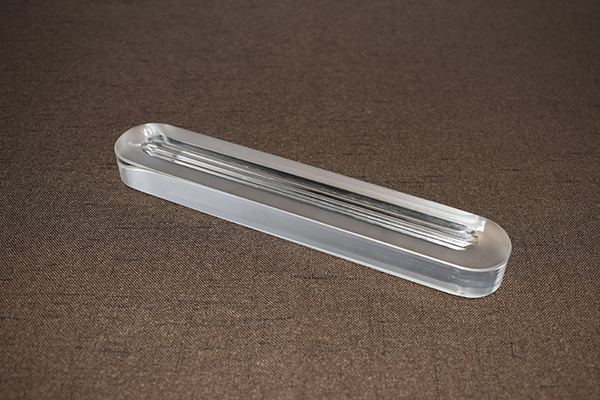
Why Does Sight Glass Require Strict Annealing Treatment?
In industrial applications, sight glass is often subjected to pressure, temperature fluctuations, and mechanical stress. While material selection and structural design are important, annealing treatment is a critical manufacturing step that directly determines the strength, stability, and reliability of the glass.
The primary purpose of annealing is to eliminate internal residual stress. During the glass forming and cooling process, uneven temperature distribution can cause different أجزاء of the glass to contract at different rates. This creates internal stress that is not visible but can significantly weaken the material. Without proper annealing, these stresses may lead to spontaneous cracking or sudden failure under load.
Annealing works by carefully reheating the glass to a specific temperature and then cooling it slowly and uniformly. This process allows the internal structure to relax and reach a more stable state. As a result, the glass becomes more resistant to mechanical and thermal stress.
Another key benefit of annealing is improved mechanical strength and durability. While annealing does not increase strength in the same way as tempering, it ensures that the glass achieves its designed strength level by removing hidden weaknesses.
Annealed glass also performs better under thermal conditions. In industrial environments where temperature changes are common, residual stress can combine with thermal stress, increasing the risk of cracking. Properly annealed glass minimizes this risk and enhances resistance to thermal shock.
In addition, annealing contributes to dimensional stability and optical quality. It helps maintain uniform thickness and reduces distortion, ensuring clear and accurate visual observation—an essential requirement for sight glass applications.
From a safety perspective, strict annealing reduces the likelihood of unexpected failure, especially in pressure equipment where glass integrity is critical.
We implement precise annealing processes with strict temperature control and quality inspection to ensure that every sight glass product meets high industrial standards. This guarantees reliable performance, improved safety, and long service life in demanding environments.
In glass manufacturing, stability begins with proper annealing.