News Detail
What Happens When Glass Materials Have Mismatched Thermal Expansion?
Thermal expansion mismatch occurs when glass is combined with other materials—such as metals, ceramics, or different glass types—that expand and contract at different rates during temperature changes. In industrial equipment, laboratory devices, and optical systems, this mismatch can introduce significant mechanical stress and affect long-term reliability.
1. Stress Accumulation at Interfaces
When two materials with different thermal expansion coefficients are bonded or sealed together, temperature changes cause them to expand or contract unevenly. This difference creates mechanical stress at the interface, especially during heating or cooling cycles. Over time, repeated stress accumulation can weaken the bond or damage the glass component.
2. Cracking or Fracture Risk
Glass is a brittle material and has limited tolerance for tensile stress. If thermal expansion mismatch generates stress beyond the glass strength limit, micro-cracks or sudden fracture may occur. This is particularly common in high-temperature environments or applications with rapid thermal cycling.
3. Seal Failure and Leakage
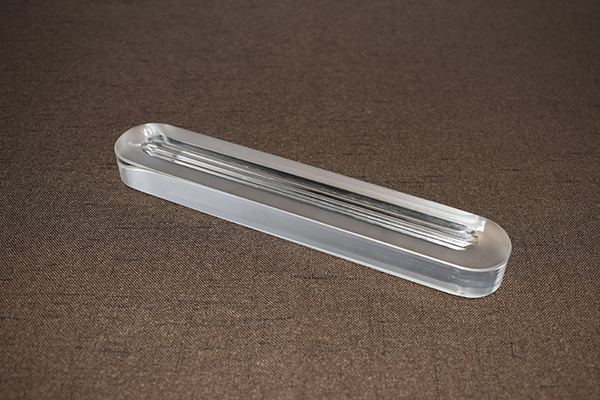
In assemblies where glass forms part of a sealing structure—such as sight glass windows or glass-to-metal seals—thermal mismatch can gradually reduce sealing pressure. Gaskets or adhesives may loosen as materials shift relative to each other, increasing the risk of leakage in pressure or vacuum systems.
4. Optical Distortion
In optical systems, uneven thermal expansion can slightly deform the glass surface or alter internal stress distribution. These changes may lead to optical distortion, focal shift, or measurement inaccuracies, especially in precision instruments.
5. Accelerated Fatigue in Thermal Cycling
Applications that repeatedly transition between high and low temperatures are particularly vulnerable. Each heating and cooling cycle introduces stress fluctuations, gradually causing material fatigue, interface degradation, and eventual failure.
6. Reduced Structural Stability
In large glass components or composite structures, mismatched expansion may lead to warping, loosening of fixtures, or uneven load distribution, which further increases the risk of mechanical damage.
In summary, thermal expansion mismatch can cause interface stress, cracking, sealing problems, optical distortion, and long-term fatigue failure. For reliable system design, engineers must carefully match materials with compatible thermal expansion coefficients or incorporate flexible sealing structures that can absorb thermal movement.