News Detail
The Relationship Between Sight Glass Thickness and Safety Factor
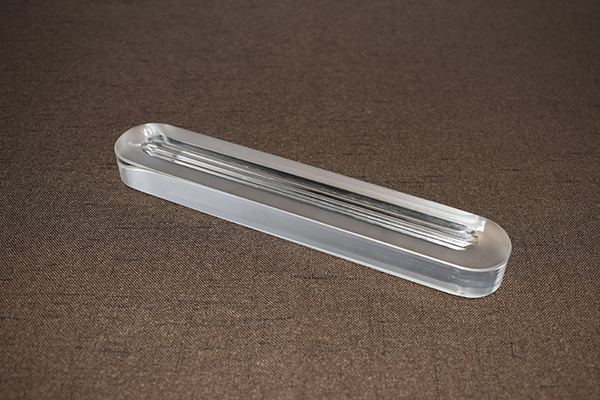
Sight glass is a critical component in pressure vessels, pipelines, and industrial equipment, allowing operators to visually monitor internal processes under controlled conditions. Among all design parameters, glass thickness has the most direct impact on the safety factor of a sight glass assembly. Understanding this relationship is essential for preventing failure and ensuring reliable operation.
The safety factor refers to the ratio between the maximum strength of the glass and the actual stress experienced during operation. Increasing glass thickness reduces bending stress under pressure, thereby raising the safety factor. In high-pressure environments, even a small increase in thickness can significantly improve pressure resistance and reduce the risk of rupture.
However, thickness alone does not guarantee safety. Stress distribution plays a critical role. Thicker glass can still fail if edge treatment is poor or if stress concentrates at mounting points. Proper chamfering, polishing, and surface finishing are essential to prevent microcracks that can propagate under pressure.
Glass thickness must also be evaluated together with material properties. For example, quartz glass has higher intrinsic strength and lower thermal expansion than borosilicate or soda-lime glass. This means that, for the same thickness, quartz glass can achieve a higher safety factor under identical pressure conditions.
Installation conditions further influence the effective safety factor. Uneven bolt tightening, misaligned frames, or rigid mounting without allowance for thermal expansion can introduce pre-stress into the glass. In such cases, even an over-thick sight glass may fail prematurely.
Finally, excessive thickness has practical limits. Very thick glass increases weight, cost, and optical distortion, potentially reducing visibility. Therefore, thickness should be calculated based on operating pressure, temperature, window diameter, and applicable standards such as ASME or DIN, rather than selected arbitrarily.
In summary, sight glass thickness and safety factor are closely linked, but thickness must be optimized alongside material selection, edge quality, and installation design. A balanced approach ensures both safety and functional performance in demanding industrial applications.