News Detail
Structural Differences Between Borosilicate Glass and Ordinary Glass
Glass materials are widely used across industrial, laboratory, and daily applications, but not all glass is created equal. Among the most important distinctions is the difference between borosilicate glass and ordinary soda-lime glass. Their structural differences at the material level directly determine their performance in demanding environments.
The primary difference lies in their chemical composition. Ordinary glass mainly consists of silica (SiO₂), sodium oxide (Na₂O), and calcium oxide (CaO). In contrast, borosilicate glass incorporates a significant amount of boron oxide (B₂O₃) into its structure. This addition fundamentally alters the glass network, creating a more stable and tightly bonded molecular structure.
Because of this structural variation, borosilicate glass exhibits a much lower coefficient of thermal expansion. The boron atoms form stronger bonds within the silica network, reducing the movement of the structure when exposed to temperature changes. As a result, borosilicate glass can withstand rapid heating and cooling without cracking, while ordinary glass is more prone to thermal stress and breakage.
Another key structural difference is chemical durability. The modified network structure of borosilicate glass makes it more resistant to chemical attack from acids, alkalis, and solvents. Ordinary glass, with its higher alkali content, is more susceptible to corrosion and surface degradation over time.
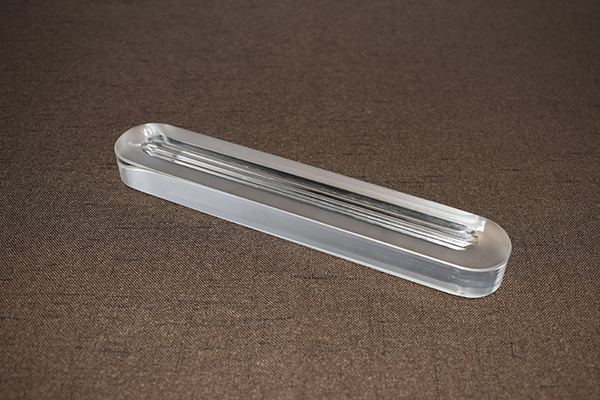
In terms of mechanical stability, borosilicate glass generally performs better under combined thermal and mechanical stress, although both materials remain brittle compared to metals. The enhanced structural integrity of borosilicate glass makes it suitable for industrial sight glasses, laboratory equipment, and high-temperature applications.
Additionally, borosilicate glass maintains better optical clarity and long-term stability, even after prolonged exposure to harsh environments. Ordinary glass may gradually lose transparency or develop surface defects under similar conditions.
Better structure leads to better performance—and better reliability.