News Detail
Stress Analysis of Sight Glass During Installation
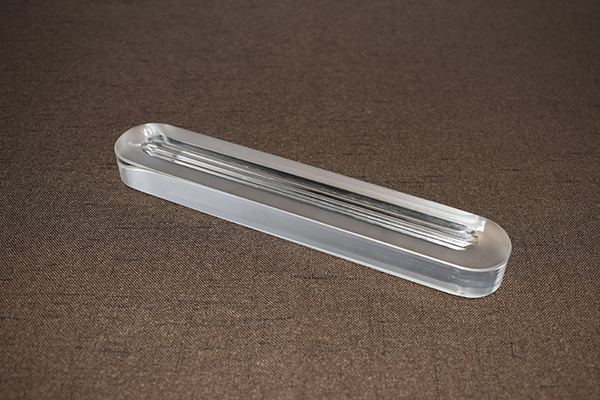
Sight glass is an essential component in pressure vessels, pipelines, and chemical equipment, enabling direct observation of internal media flow and reaction conditions. However, due to the inherent brittleness and low tensile strength of glass materials, improper installation frequently leads to uneven stress distribution, ultimately causing glass cracking or even catastrophic brittle fracture. Understanding the stress characteristics of sight glass during installation is critical for ensuring equipment safety and long-term operational reliability.
1. Bolt Preload and Its Stress Concentration Effect
Bolt tightening is the most common source of stress problems during sight glass installation. When bolts are tightened sequentially rather than diagonally, the glass experiences uneven compression around its perimeter, creating localized stress concentrations far exceeding the material’s allowable limits. Finite element analysis studies have demonstrated that gland and sight glass strength are significantly influenced by bolt load magnitude—excessive preload directly leads to glass fracture, while insufficient tightening results in seal leakage.
Proper technique requires diagonal, stepwise tightening: initially applying 50% of target torque in cross pattern, followed by progressive increases to final torque while verifying seal uniformity. Using a calibrated torque wrench in actual operation provides a safe and feasible method for achieving consistent bolt load application.
2. Thermal Stress from Temperature Gradients
Different glass compositions have distinct thermal shock tolerances. Borosilicate glass allows sudden temperature changes up to 230℃→20℃, quartz glass up to 550℃→20℃, while soda-lime glass permits only 120℃→20℃. During installation or operation, if hot media contacts glass that has been chilled by prior cold fluid without adequate warm-up, the resulting temperature gradient induces differential expansion between the inner and outer glass surfaces. This creates internal thermal stresses that compound mechanical stresses from bolting, frequently triggering immediate cracking.
The lowest mechanical strength of glass occurs around 200℃, where increased thermal vibration promotes crack propagation from surface defects. For high-temperature applications exceeding 500℃, flexible graphite gaskets with a minimum thickness of 3mm help accommodate differential expansion while providing uniform load distribution.
3. External Mechanical Stresses from Piping Systems
“Installation stress” is a commonly overlooked factor in site practice. When connecting upstream and downstream piping, if alignment is poor, operators may forcibly pull or bend pipes to match sight glass flanges. This introduces not only internal pressure stress but also additional bending moments and shear forces from improper pipe alignment. These external mechanical loads, once applied to the glass surface, create complex stress states that exceed the glass’s rated pressure capacity, leading to delayed fracture during later service.
Proper installation requires ensuring pipe alignment is within tolerance before securing sight glass bolts. The vessel’s internal pressure must not exceed the sight glass’s rated specification, and no additional stresses should be applied to the glass after installation.
4. Residual Stress from Manufacturing Defects
Even with perfect installation technique, existing defects in the glass significantly reduce mechanical strength. Solid inclusions (e.g., unmelted batch materials), gaseous bubbles, and chemical inhomogeneities create stress concentration points within the glass matrix. Specimens from the same production batch may exhibit strength variations of 1.5 to 2 times due to defect distribution differences. Microscopic defects such as local devitrification and grain boundaries often cluster around macroscopic flaws, generating micro-cracks that propagate under service stresses. This explains why two seemingly identical sight glasses—installed identically under the same piping conditions—may have dramatically different service lives.
5. Gasket Selection and Surface Condition Effects
Improper gasket selection or uneven seating directly transmits bolt load as point stress rather than distributed pressure. For operating temperatures up to 280℃, PTFE (polytetrafluoroethylene) or asbestos gaskets are suitable; above 500℃, graphite gaskets are recommended. Gasket thickness must increase proportionally with glass thickness to accommodate differential thermal expansion. Additionally, the sight glass seat must be perfectly smooth and clean—any burrs, weld spatter, or contamination creates high-pressure points that induce bending stress in the glass during bolt tightening.
Conclusion
Sight glass stress analysis during installation is inherently cross-disciplinary, involving mechanical engineering, materials science, and structural design. Failure to properly manage bolt preload, thermal gradients, external piping stress, manufacturing quality, and gasket conditions commonly leads to premature glass failure. Successful engineering practice demands understanding these stress mechanisms and implementing site-appropriate process control measures to ensure reliable, long-term equipment operation.