News Detail
Performance of Glass Materials in Corrosive Environments
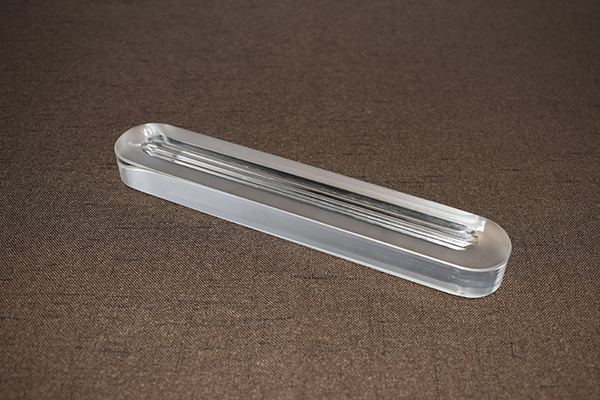
Glass materials are widely used in chemical, pharmaceutical, and industrial systems due to their excellent resistance to corrosion. In environments involving acids, alkalis, solvents, or reactive gases, the ability of glass to maintain chemical stability and structural integrity makes it a preferred material for observation windows, pipelines, and reactor components.
One of the primary advantages of glass is its inert chemical nature. Most industrial glass types—especially borosilicate glass and quartz glass—are composed mainly of silica-based networks that are highly resistant to chemical attack. These materials can withstand strong acids such as sulfuric acid, nitric acid, and many organic solvents without significant degradation, making them suitable for harsh chemical processes.
However, the performance of glass in corrosive environments is not uniform across all conditions. Alkaline substances (such as sodium hydroxide or potassium hydroxide) can gradually attack the silica network, especially at elevated temperatures. This may lead to surface erosion, reduced transparency, and long-term weakening of the material. Therefore, in strong alkaline environments, careful material selection and protective measures are necessary.
Temperature and concentration also play important roles in corrosion behavior. Higher temperatures generally accelerate chemical reactions, increasing the rate of glass corrosion. Similarly, higher concentrations of corrosive agents can intensify material degradation. In such cases, high-purity quartz glass often performs better due to its simpler composition and superior chemical resistance.
Another important aspect is surface quality and processing. Smooth, well-finished glass surfaces are more resistant to corrosion because they have fewer defects where chemical reactions can initiate. Poor surface quality or microcracks can accelerate localized corrosion and reduce service life.
In addition, glass offers excellent non-reactivity and contamination resistance, which is critical in pharmaceutical and high-purity chemical applications. It does not easily leach impurities into the process medium, ensuring product quality and consistency.
At Zhongpanxin, we provide high-performance glass solutions designed for corrosive environments. By selecting appropriate materials and applying strict quality control, we ensure that our products maintain durability, clarity, and safety even under aggressive chemical conditions.
In corrosive environments, material stability is the foundation of reliable performance.