News Detail
Performance Differences of Various Glass Materials in High-Temperature Environments
Glass materials are widely used in industrial, laboratory, and optical equipment exposed to elevated temperatures. However, not all glass types perform equally under heat. Understanding the performance differences among common glass materials in high-temperature environments is essential for safe material selection and long-term reliability.
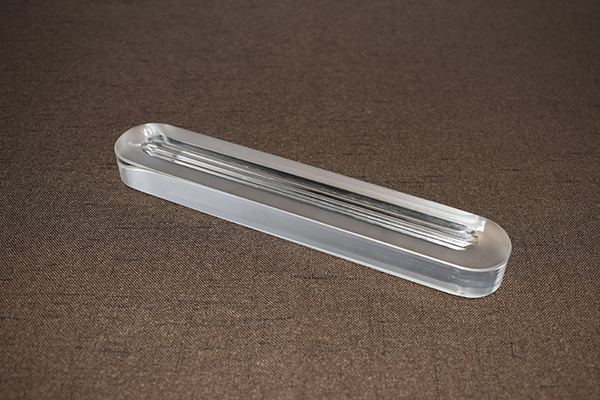
Borosilicate glass is one of the most commonly used heat-resistant glasses. It has a relatively low thermal expansion coefficient, which allows it to withstand moderate temperature changes without cracking. Typically, borosilicate glass can operate continuously at temperatures around 450–500°C and tolerate short-term exposure to higher heat. This makes it suitable for laboratory glassware, sight glasses, and chemical equipment.
Quartz glass offers the highest thermal performance among standard glass materials. With a softening point above 1,600°C and an extremely low thermal expansion coefficient, quartz glass can endure extreme temperatures and rapid thermal cycling. It maintains excellent optical clarity even under intense heat, making it ideal for high-temperature furnaces, semiconductor processing, UV systems, and optical applications.
Tempered glass, while mechanically strong, has limitations in high-temperature environments. Its strength comes from internal stress introduced during tempering. Prolonged exposure to high temperatures may relax these stresses, reducing strength and increasing the risk of spontaneous breakage. As a result, tempered glass is generally unsuitable for sustained high-temperature industrial applications.
Soda-lime glass, commonly used in everyday products, performs poorly under heat. It has a higher thermal expansion coefficient and low thermal shock resistance, making it prone to cracking when exposed to temperature fluctuations. Its use in high-temperature environments is therefore very limited.
In summary, glass performance at high temperatures depends on thermal expansion, softening point, and structural stability. Quartz glass is the preferred choice for extreme conditions, borosilicate glass suits moderate high-temperature applications, while tempered and soda-lime glass have clear limitations. Proper material selection ensures safety, durability, and optimal performance in heat-intensive environments.