News Detail
Comparison of Temperature Resistance Ranges of Different Glass Materials
In industrial and laboratory applications, selecting the right glass material often depends on its temperature resistance range. Different types of glass vary significantly in how much heat they can withstand and how they respond to temperature changes. Understanding these differences is essential for ensuring safety and long-term performance.
Ordinary soda-lime glass has the lowest temperature resistance. It typically performs reliably up to around 150–200°C. Beyond this range, it becomes prone to softening and cracking, especially under thermal shock. Due to its relatively high thermal expansion coefficient, it is not suitable for environments with rapid temperature fluctuations.
Tempered glass improves mechanical strength but does not significantly increase the maximum operating temperature compared to ordinary glass. It can generally withstand 200–300°C, but its main advantage lies in impact resistance rather than high-temperature performance.
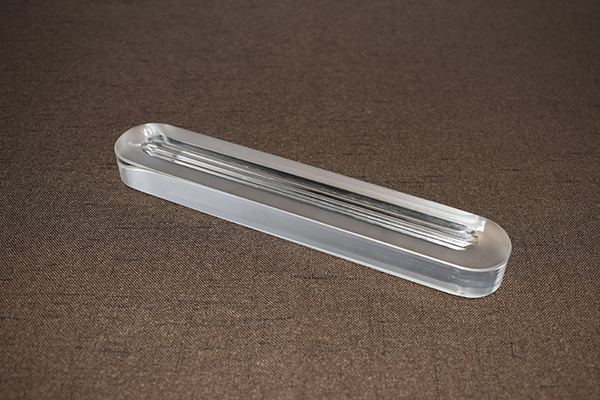
Borosilicate glass offers a much wider usable temperature range. It can typically operate safely at 400–500°C and has excellent resistance to thermal shock due to its low thermal expansion. This makes it one of the most commonly used materials in laboratory equipment and industrial sight glass applications.
Quartz glass (fused silica) provides the highest temperature resistance among common industrial glass materials. It can withstand temperatures above 1000°C, with some grades capable of short-term exposure to even higher levels. Its extremely low thermal expansion allows it to endure rapid heating and cooling without cracking, making it ideal for high-temperature and precision applications.
Another important consideration is the difference between continuous operating temperature and short-term tolerance. Some materials can briefly withstand higher temperatures but may degrade if exposed continuously. Therefore, application conditions must be carefully matched with material specifications.
In addition, environmental factors such as chemical exposure and pressure can influence effective temperature limits. For example, corrosive environments or mechanical stress may reduce the safe operating range.
Choosing the right temperature range is key to choosing the right material.