News Detail
Common Issues in Custom Non-Standard Sight Glass Fabrication
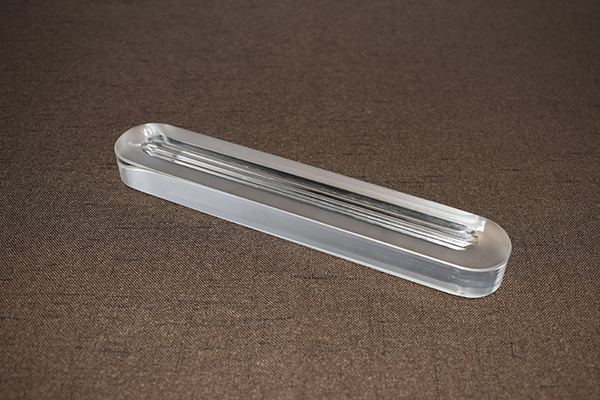
Custom non-standard sight glass is widely required in chemical processing, pharmaceuticals, vacuum systems, and high-pressure equipment. However, because it must match specific installation sizes and withstand unique working conditions, non-standard fabrication often involves challenges not seen in regular mass-produced products. Understanding these common issues helps buyers communicate requirements more effectively and avoid costly delays.
One of the most frequent problems is unclear dimensional specifications. Sight glass thickness, outer diameter, inner diameter, and tolerance levels must be precisely defined. Even a 0.5 mm deviation can cause installation gaps or sealing failure. Customers sometimes provide incomplete drawings, leading to misinterpretation during production.
Another issue is material misselection. Different working conditions require different materials—borosilicate for thermal shock resistance, quartz for high transparency and extreme temperatures, and tempered glass for impact resistance. When operating temperature, pressure, or chemical environment is not fully disclosed, manufacturers may choose a material unsuitable for long-term performance.
Edge finishing problems are also common. Non-standard sight glass often requires custom chamfers, polished edges, or beveled surfaces to match specific gasket or metal frame designs. Without specifying edge treatment, the final product may not fit properly or may carry internal stress, increasing the risk of cracking.
Lead time is another concern. Non-standard fabrication involves special molds, precision grinding, or custom tempering cycles, which extend production time. Customers frequently underestimate the time required, especially for quartz or ultra-thick designs.
Finally, quality inspection misunderstandings may arise. Buyers may expect optical-grade clarity, while the application only requires industrial-grade transparency. Conversely, high-pressure applications may require strict stress testing that is not automatically included.
Clear communication, detailed drawings, and accurate working-condition data are the keys to successful non-standard sight glass customization.