News Detail
Chemical Stability Analysis of Borosilicate Glass
Borosilicate glass has earned its reputation in laboratories and industrial processes largely due to its outstanding chemical durability. This resistance to attack by water, acids, and other reagents is not accidental—it comes directly from the glass’s unique chemical composition and atomic structure.
The Composition-Stability Connection
The chemical stability of borosilicate glass arises from its high silica content, typically around 80 percent, combined with boron trioxide as a key network former. The base chemical composition of borosilicate glass determines its resistance to chemical attack. This high silica and boria content creates a tightly bound silicon-oxygen network that resists breakdown by most chemical agents.
Critical to this stability is the low alkali content of borosilicate glass. Ordinary soda-lime glass contains significant sodium and calcium that act as network modifiers. These elements disrupt the silica network, making it more vulnerable to leaching and chemical attack. Borosilicate glass contains far less alkali, resulting in a more durable structure that resists degradation even under harsh conditions.
Hydrolytic Resistance
One of the most important measures of chemical stability is hydrolytic resistance, which is the glass’s ability to resist attack by water. This property is crucial for glass used in pharmaceutical packaging and laboratory applications where aqueous solutions are handled.
Borosilicate glass exhibits excellent hydrolytic resistance, which correlates directly with the material’s boron content. This translates to minimal leaching of alkali ions into water or aqueous solutions, making borosilicate highly suitable for applications involving contact with pharmaceuticals or biological samples. As a result, borosilicate glass is an ideal material for manufacturing pharmaceutical packaging and laboratory tools.
Acid Resistance
Borosilicate glass demonstrates strong resistance to most mineral acids, including hydrochloric acid, sulfuric acid, nitric acid, and aqua regia. The high silica content provides protection against acid attack by maintaining the integrity of the silicon-oxygen network.
However, even borosilicate glass has limits. Hydrofluoric acid attacks the silica structure aggressively, as does hot concentrated phosphoric acid. For applications involving these aggressive reagents, specialized glasses or other materials may be necessary.
Alkali Resistance
Alkali resistance is where borosilicate glass shows its primary weakness. The material is less resistant to strong alkali solutions, especially at elevated temperatures and high concentrations. The silicon-oxygen network is attacked by hydroxide ions, leading to surface dissolution and degradation. This limitation is important to consider when using borosilicate glass for applications involving strong alkalis.
Temperature Effects on Chemical Stability
Temperature significantly affects the chemical resistance of borosilicate glass. Even resistant acids become more aggressive at elevated temperatures, and temperature changes further influence chemical stability. For high-temperature applications, the glass’s performance may degrade more rapidly. This is why understanding the intended operating temperature range is essential when selecting borosilicate glass for a specific application.
Practical Implications
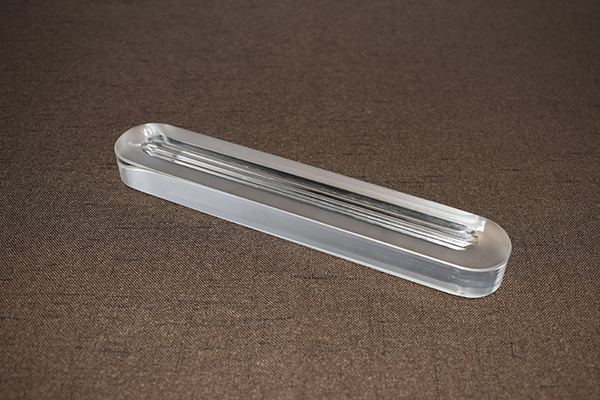
The chemical stability of borosilicate glass makes it the material of choice for a wide range of applications. In laboratory settings, it provides confidence that the glassware itself is not contaminating analytical results. In pharmaceutical packaging, it ensures drug stability and patient safety. For industrial sight glasses, it offers reliable performance in corrosive environments.
Borosilicate glass’s chemical stability comes from its high silica content and low alkali composition, creating a durable silicon-oxygen network resistant to water and most acids. While it has limitations with strong alkalis and hydrofluoric acid, its overall durability makes it indispensable for laboratory and pharmaceutical applications. In these demanding environments, borosilicate remains the gold standard.