News Detail
Application Boundaries Between Quartz Glass and Borosilicate Glass
In industrial and scientific fields, both quartz glass and borosilicate glass are widely used due to their excellent thermal and chemical properties. However, despite some similarities, their performance characteristics differ significantly, defining clear application boundaries between the two materials.
The most notable difference lies in temperature resistance. Quartz glass (fused silica) has an extremely high softening point and can withstand temperatures above 1000°C, with excellent resistance to thermal shock. This makes it ideal for high-temperature environments such as semiconductor processing, optical systems, and high-temperature furnaces. In contrast, borosilicate glass typically operates reliably at temperatures up to around 400–500°C. While it performs well under moderate heat, it is not suitable for extreme high-temperature applications.
Another key boundary is optical performance. Quartz glass offers superior transparency across a wider spectrum, including ultraviolet (UV) and infrared (IR) ranges. This makes it the preferred choice for precision optical instruments, UV lamps, and laser applications. Borosilicate glass, while highly transparent in the visible range, has limited transmission in the UV spectrum, restricting its use in advanced optical systems.
Chemical resistance also differentiates the two. Both materials are resistant to many chemicals, but quartz glass, due to its high purity and simple composition, performs better in highly corrosive or ultra-clean environments. It is often used in semiconductor and pharmaceutical processes where contamination must be minimized. Borosilicate glass, although chemically stable, is more suitable for general laboratory and industrial applications.
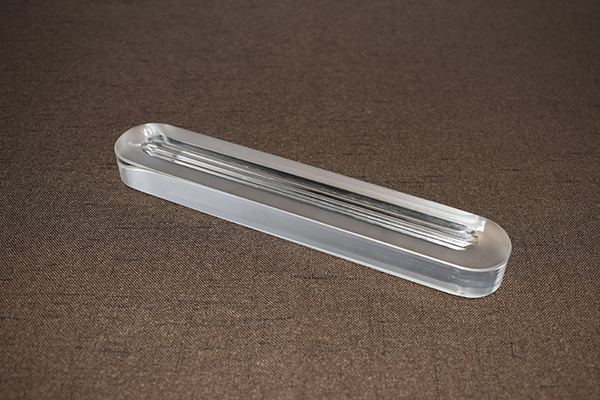
From a mechanical and cost perspective, borosilicate glass has advantages in manufacturability and affordability. It is easier to process into complex shapes and is more cost-effective, making it widely used in laboratory glassware, sight glasses, and industrial equipment. Quartz glass, on the other hand, is more expensive and typically reserved for specialized, high-performance applications.
In practical use, the choice between these materials depends on balancing temperature requirements, optical properties, chemical environment, and cost considerations. Quartz glass dominates in extreme and precision applications, while borosilicate glass is the preferred solution for most general industrial uses.