News Detail
Analysis of the Effect of Glass Thickness on Pressure Resistance
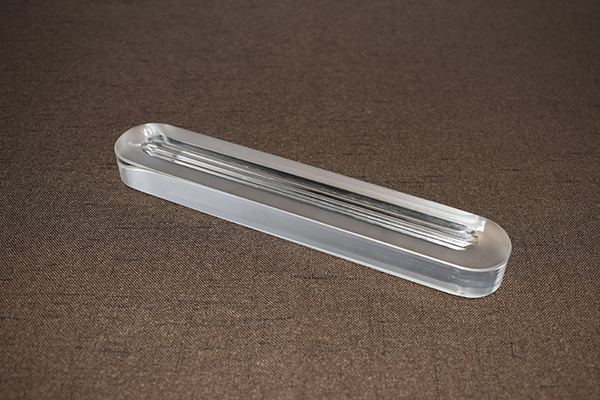
In industrial applications such as sight glasses, observation windows, and pressure vessels, the thickness of glass is a key parameter that directly determines its ability to withstand pressure. Proper thickness design is essential for ensuring safety, durability, and reliable performance under operating conditions.
From a mechanical perspective, glass under pressure can be simplified as a plate subjected to uniform load. As thickness increases, the glass becomes more resistant to bending and deformation. This significantly reduces tensile stress on the surface, which is critical because glass is much weaker in tension than in compression. Therefore, increasing thickness generally improves pressure resistance.
The relationship between thickness and strength is not linear but highly sensitive. A relatively small increase in thickness can lead to a substantial improvement in load-bearing capacity. This is because thicker glass distributes stress more effectively and lowers the risk of crack initiation and propagation.
However, increasing thickness is not without limitations. Thicker glass also introduces higher internal stress risks, especially if manufacturing processes such as cooling and annealing are not properly controlled. Residual stress within thick glass can reduce its effective strength and lead to unexpected failure.
Another important consideration is thermal performance. In high-temperature or rapidly changing environments, thicker glass may experience larger internal temperature gradients. This can result in increased thermal stress, potentially offsetting the benefits gained from higher mechanical strength.
The installation structure also interacts with thickness. Proper support and uniform clamping can allow thinner glass to perform effectively, while poor installation may cause even thick glass to fail due to uneven stress distribution.
In practical engineering, thickness selection must balance pressure requirements, material properties, safety factors, and cost considerations. Standards and calculation methods are typically used to determine the optimal thickness for specific applications.
we combine precise thickness calculations with high-quality materials and strict manufacturing control to ensure optimal pressure resistance and long-term reliability. Our industrial glass solutions are designed to perform safely and efficiently under demanding conditions.
Thickness is not just a dimension—it is a critical factor in structural safety.