News Detail
Advantages of Thick-Walled Glass in Industrial Equipment
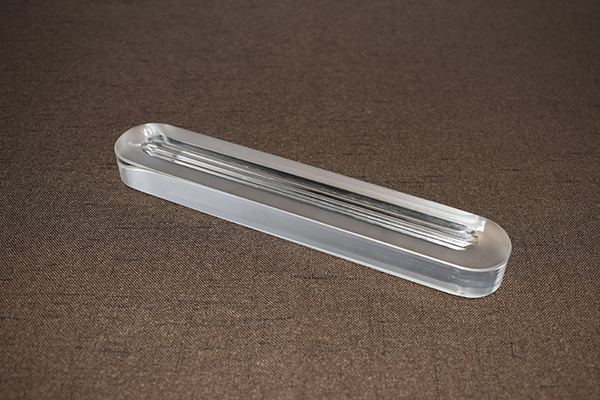
Thick-walled glass is widely used in industrial equipment such as pressure sight windows, observation ports, reactors, and protective viewing panels. Compared with standard glass, its increased thickness provides several important engineering advantages that enhance safety, durability, and operational reliability.
One of the most significant advantages is higher pressure resistance. Thicker glass can withstand greater mechanical loads and internal pressure because it offers increased bending stiffness and lower surface stress under the same load conditions. This makes it especially suitable for pressure vessels and high-load observation applications.
Another key benefit is improved impact resistance. Although glass remains a brittle material, thicker sections can absorb and distribute external impact forces more effectively, reducing the risk of breakage from accidental contact, vibration, or mechanical shock.
Thick-walled glass also provides greater safety margins in harsh industrial environments. In systems involving fluctuating pressure, temperature cycling, or uncertain operating conditions, the additional structural reserve offered by thicker glass helps improve reliability and reduce failure risk.
Enhanced durability and wear resistance is another advantage. Thicker glass better tolerates long-term exposure to abrasion, cleaning, and surface wear without significantly compromising structural integrity. This is particularly valuable in environments where the glass may be exposed to particles, repeated maintenance, or chemical cleaning.
In high-temperature applications, thick-walled glass can offer better thermal mass and temperature buffering, helping moderate short-term temperature fluctuations. When properly designed, this can improve operational stability in thermal processing systems.
Additionally, thick-walled glass often supports longer service life. Because the material experiences lower stress relative to its capacity under normal operating conditions, fatigue and crack propagation are less likely over time—provided manufacturing quality and installation are properly controlled.
However, thickness must be engineered carefully. Excessive thickness may introduce higher residual stress, increased weight, and greater thermal gradient risks. Therefore, the benefits of thick-walled glass are maximized only when combined with proper material selection, annealing, and structural design.
At Zhongpanxin, we manufacture thick-walled industrial glass components with precise dimensional control and strict quality standards. Our products deliver the strength, safety, and durability required for demanding industrial environments.
Greater thickness means greater protection—when engineered correctly.